How to Transcribe 19th-Century Antique Recipes: 1892 Molasses Gingerbread
Recipes written before 1930 present unique historical challenges: iron gall inks that fade to sepia, dip-pen flourishes, and instructions written for cast-iron wood stoves. Here is how modern culinary AI brings Victorian recipes into modern kitchens.
📷 Physical Artifact & Archival Condition
Verified Archival Scan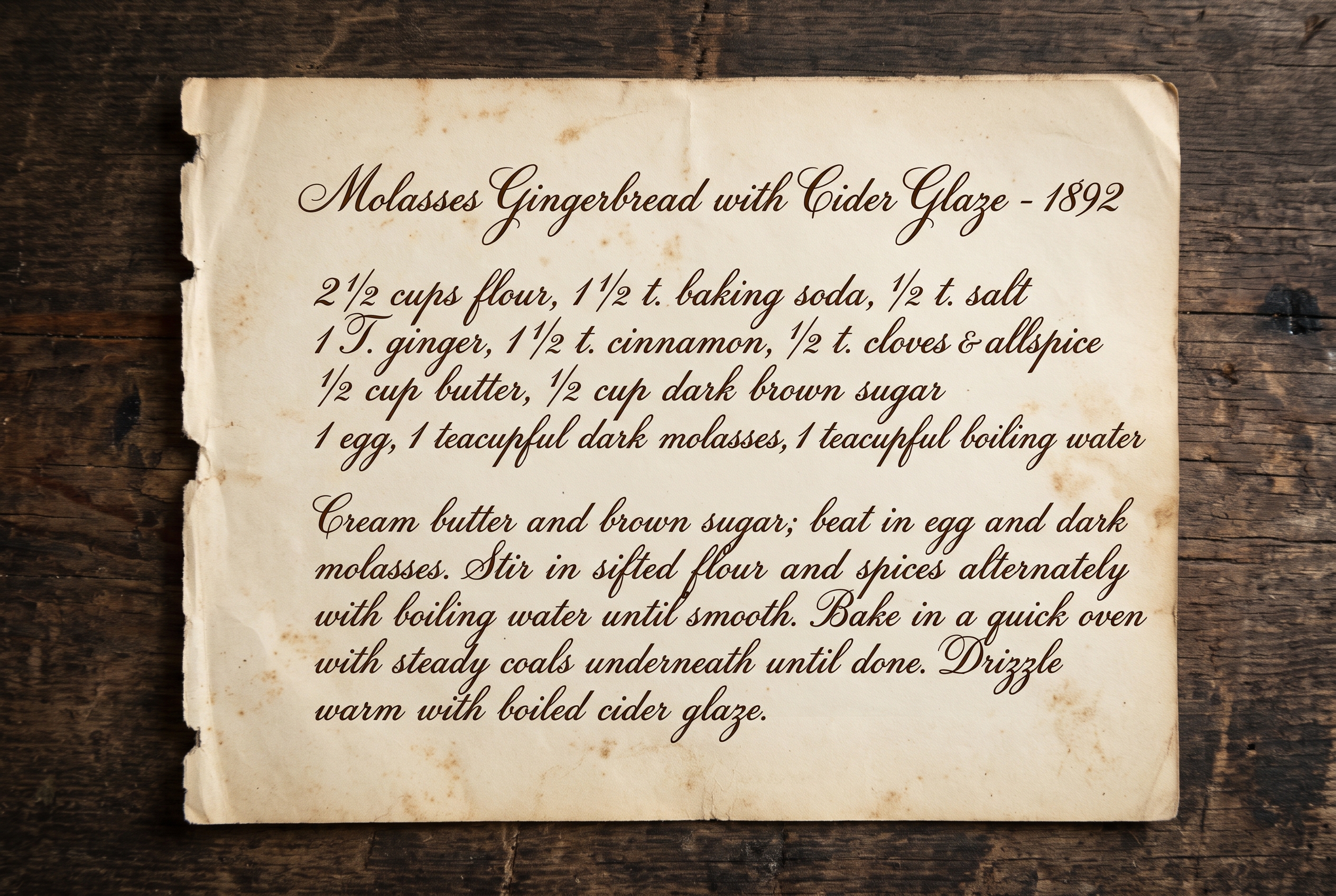
Key Handwriting & Physical Friction Points:
- •Iron gall ink fading from black to pale sepia, reducing contrast against aged foxed paper
- •Wood-stove heat instructions ('bake in a quick oven with steady coals underneath')
- •Obsolete Victorian volumetric measures ('a teacupful of dark molasses', 'butter size of a walnut')
- •Archaic ligatures, long s characters, and nineteenth-century domestic contractions
Historical Provenance & Recipe Origin
In the 1890s, home cooks recorded recipes in unlined rag-paper ledgers using steel dip pens and iron gall ink. Rather than specifying 350 degrees, directions spoke of 'moderate ovens' or 'quick coals', and ingredients were measured in teacups. This 1892 gingerbread ledger leaf was decoded and converted to modern kitchen measures by Unscribble.
Hurdles in 19th-Century Recipe Manuscripts
1
2
✨ Historical Kitchen Taxonomy & Calligraphy Parsing
Unscribble parses 19th-century dip pen calligraphy, resolving ornate ascenders and ligatures. It automatically maps obsolete Victorian units into modern grams and cups, making historical family dishes cookable today.
Step-by-Step Archival Transcription & Digitization Workflow
-
Step 1
Capture Without Glare
Lay the antique page flat in gentle indirect light. Do not place fingers or clips on brittle paper edges.
Archivist Pro Tip: Include margin annotations and section headings.
-
Step 2
AI Historical Conversion
Unscribble translates Victorian script, calculates modern oven temps, and standardizes teacup measurements.
Archivist Pro Tip: Compare modern conversions against original phrasing in the editor.
-
Step 3
Preserve in Cloud Library
Save to your cloud collection where it remains safe for future generations without physical handling wear.
Archivist Pro Tip: Generate a restored food photo to visualize how the historic dish looks.
1892 Victorian Spiced Molasses Gingerbread with Cider Glaze
🥣 Ingredients
- • 2½ cups all-purpose flour
- • 1½ tsp baking soda
- • 1 tbsp ground ginger (fresh and aromatic)
- • 1½ tsp ground cinnamon
- • ½ tsp ground cloves
- • ½ tsp ground allspice
- • ½ tsp fine sea salt
- • ½ cup (1 stick) unsalted butter, softened
- • ½ cup dark brown sugar, packed
- • 1 large egg, room temperature
- • 1 cup dark unsulfured molasses (original recipe: 1 teacupful)
- • 1 cup boiling water
- • 1 cup powdered sugar (for glaze)
- • 2 to 3 tbsp boiled apple cider or fresh lemon juice
🍳 Preparation & Cooking Directions
- 1 Preheat oven to 350°F (modern conversion of Victorian "quick oven"). Grease and flour a 9x9-inch square baking pan or line with parchment paper.
- 2 In a bowl, sift together flour, baking soda, ginger, cinnamon, cloves, allspice, and salt.
- 3 In a large mixing bowl, cream the softened butter and dark brown sugar with an electric mixer until fluffy and pale (about 3 mins).
- 4 Beat in the egg and molasses until thoroughly combined.
- 5 Add the flour mixture alternately with the boiling water in three additions, beginning and ending with the dry ingredients. Mix on low speed just until smooth (batter will be thin and liquid).
- 6 Pour immediately into prepared baking pan. Bake at 350°F for 32 to 35 minutes until a toothpick inserted into center comes out clean with moist crumbs.
- 7 Whisk powdered sugar with boiled cider or lemon juice until a smooth glaze forms. Drizzle warm over the cake while still slightly warm from the oven. Slice into 9 generous squares.
Chef Technique & Notes:
- ✓The boiling water activates the baking soda with the acidic molasses immediately, creating an airy, velvety crumb.
- ✓Ground ginger loses potency quickly—use fresh, fragrant ginger for true 19th-century warmth.
🏛️ Museum-Grade Physical Paper Preservation Tips
- • Handle pre-1900 paper manuscripts with clean, dry hands (avoid cotton gloves which reduce dexterity on brittle paper).
- • Keep in archival acid-free buffered storage boxes at stable temperatures below 70°F.
- • Digitizing prevents repeated physical handling of delicate paper fibers.